
Cricket Analysis' Biggest Blind Spot: Judging the Game Without Naming the Format
प्रश्न: क्रिकेट विश्लेषण में सबसे बड़ी बुनियादी गलती क्या है? उत्तर: प्रारूप (टेस्ट, वनडे, टी20, द हंड्रेड) तय किए बिना खिलाड़ी या टीम का आकलन करना। चारों प्रारूपों की रणनीति और सफलता के पैमाने अलग हैं, इसलिए आंकड़े एक प्रारूप से दूसरे में स्थानांतरित नहीं किए जा सकते। प्रश्न: टेस्ट और टी20 में बल्लेबाज़ी का मापदंड कैसे अलग है? उत्तर: टेस्ट में औसत, टिकने की क्षमता और कठिन परिस्थितियों में बनी पारियाँ मायने रखती हैं; टी20 में स्ट्राइक रेट और फिनिशिंग क्षमता निर्णायक होती है। एक ही औसत दोनों में विपरीत अर्थ दे सकता है। प्रश्न: टी20 की दो निर्णायक खिड़कियाँ कौन-सी हैं? उत्तर: पहले छह ओवर का पावरप्ले (केवल दो फील्डर बाहर) और आखिरी पाँच ओवर (डेथ ओवर), जहाँ यॉर्कर और स्लोअर बॉल का फ़र्ज़ तय होता है। प्रश्न: द हंड्रेड कैसे अलग है? उत्तर: पारी 100 गेंदों की होती है, पावरप्ले पहली 25 गेंदों तक, और एक गेंदबाज़ लगातार 5 या 10 गेंदें फेंक सकता है (अधिकतम 20)। प्रश्न: शासन-स्तर पर कौन-से तथ्यात्मक बिंदु महत्वपूर्ण हैं? उत्तर: अपंपायर कॉल का अर्थ है कि त्रुटि-सीमा के भीतर का निर्णय मैदान पर दिए फैसले के पक्ष में रहता है; डीएलएस बारिश से बाधित मुकाबलों में लक्ष्य संशोधित करता है; और एनओसी तथा केंद्रीय अनुबंध लीग-राष्ट्रीय टीम टकराव का केंद्र हैं। अस्वीकरण: यह सामग्री केवल खेल-सूचना संदर्भ के लिए है और किसी भी प्रकार की सट्टेबाजी सलाह नहीं है। यहाँ किसी खिलाड़ी, टीम, लीग या अधिकारी पर कोई आरोप नहीं लगाया गया है।
Every cricket season brings the same argument back. A batter plays a stunning innings, the numbers flood social media, and a few days later the same player struggles in a different setting — so the question goes up: has the form gone? Hidden inside that question is a basic error: judging the game without naming the format. Test cricket, ODI, T20 and The Hundred all look alike from a distance — same ball, same bat, same ground — but the tactics, the risk calculus and the very definition of success change completely. Any serious cricket analysis must begin with one condition: fix the format first, then form the opinion.
This is not purism. It is the same requirement as deciding whether a thermometer reads Celsius or Fahrenheit before measuring temperature. In Test cricket, an average of 40 is the mark of a fine batter; in T20, an average of 40 combined with a strike rate of 130 can actively hurt the team. One number, two formats, two opposite conclusions. An analysis that has not settled the format is not analysis — it is a pile of assumptions.
Test cricket is, first and last, a game of time. The measure of success is not how quickly runs came but how long the batter survived. The seam of the new ball, the moisture of the first morning, the flat deck of day three and the rough of day five produce four different games inside one match. That is where an anchor like Cheteshwar Pujara becomes valuable — and where the same role would become a liability in T20. Test batting is judged on average, on conversion rate across a hundred innings, and on runs made in difficult conditions, not on strike rate.
Bowling metrics invert too. Economy rate is nearly irrelevant in Test cricket; the real questions are how many overs a bowler can sustain in a spell, how often he forces a mistake, and how dangerous he remains on a fifth-day surface. The value of players like Pat Cummins or Joe Root is measured in that capacity to build sustained pressure. In T20, by contrast, a bowler's career is defined by economy rate and by the accuracy of his yorker at the death.
ODI is the middle path, and perhaps because of that it is the most misunderstood. Fifty overs break into three clear phases: the ten-over powerplay, the middle overs from eleven to forty, and the last ten. Wickets are expensive in the powerplay, the middle overs are decided by spin quotas and partnerships, and the final ten demand risk on almost every ball. Teams that keep the run rate moving through the middle usually end with a big total. This is why the value of an all-rounder or a part-time spinner is different in ODI than in T20.
T20 reduces the whole equation to two windows — the first six overs and the last five. Only two fielders may be outside the ring in the powerplay, so the gaps near the boundary are the easiest places to hit. From the sixteenth over onward the field spreads, but the pressure on the bowler peaks; this is where yorkers, slower balls and wide yorkers decide fates. Jasprit Bumrah is named as a death-overs specialist for exactly this reason, and Suryakumar Yadav is valued because he can hit to all parts of the ground. In T20, survival is not victory.
The Hundred pushes the logic one step further. An innings lasts 100 balls, the powerplay covers the first 25, and a bowler delivers five or ten consecutive balls up to a maximum of twenty. The format redefines bowling rhythm and matchup planning. An analyst who imports Test or T20 numbers into The Hundred is technically wrong, however good the intention.
That is why the first step in player evaluation is not the name but the role. Opener, anchor, finisher, pacer, spinner, all-rounder, wicketkeeper — each role has its own benchmark, and that benchmark shifts the moment the format shifts. Kane Williamson and Steve Smith are pillars in Test cricket; claiming the same in T20 would not be factual. Shaheen Afridi's threat with the new ball and Rashid Khan's mid-innings flight are successes defined in different currencies. Evaluating a player divorced from his role is reading numbers divorced from context.
Benchmarks matter as much as the number itself. Asking whether a batting average is good is an incomplete question; the complete one is what the normal average was in that format, in that role, in that era. When the game-wide strike rate rises, a performance that looks normal on an old scale is in fact declining. Numbers drift with time, and analysis has to drift with them.
The second trap is the small sample. Deciding a career on five or ten innings, and presenting it with confidence, is the most common disease in cricket commentary. The third is the superstar halo — the default credit given to a big name. Until a twelve-month trend, a home-away split and the quality of opposition are read together, a big name cannot be the basis of an evaluation.
The same discipline applies at team level. The ICC's Test, ODI and T20 rankings are three separate tables and cannot substitute for one another. Test cricket has its own arithmetic in the World Test Championship points table, where series weightings and points percentage work differently. Teams like India, Australia and England may look strong across formats, but the source of that strength differs — bowling depth in one place, batting consistency in another, all-round balance somewhere else.
Squad structure should be read across four pillars: batting depth, bowling combination, bench strength and age structure. Age structure is the least discussed and the most revealing, because it is the clearest signal of generational transition. A side whose core has crossed thirty with no ready replacements on the bench is approaching the end of a cycle, however impressive its current record looks.
Cricket's commercial layer is no longer separate from the game. The IPL, SA20, ILT20, PSL, Big Bash League and Major League Cricket each run on a different market logic. Broadcast rights value, franchise valuation and player salaries are three distinct indicators and must be read together. Judging a player's sporting ability from an auction price alone is like trusting a share price over a company's earnings.
Auction premiums have their own typology — the local young star, the all-rounder, the scarce position, the panic bid. A mechanism like the Right to Match lets a previous franchise stay in the market, but it is not proof of a player's true value. The league-versus-national-team conflict is now a permanent theme: No Objection Certificates, central contracts and league-window clashes all require clarity between boards and player management.
Rules and governance also need a factual footing. DRS and umpire's call mean that a decision falling inside the tracking technology's error margin stays with the on-field umpire; treating umpire's call as a bowler's failure is a factual error. The Duckworth-Lewis-Stern method sets revised targets in rain-affected matches and has always attracted debate. Slow over-rate penalties, fielding restrictions and the ICC's revenue distribution model are governance issues that should be raised only when there is a concrete basis. History contains serious spot-fixing and betting cases; they belong in a vigilance context, not as an allegation against any current player or team.
On the risk side, injury and workload are the most neglected dimensions. The modern calendar stacks three formats and multiple leagues on the same players; for fast bowlers that is direct injury risk, and for batters it is mental fatigue. Any assessment of a player is incomplete without looking at his workload over the past twelve months. The same applies to selection — rotation policy is not the problem; planning without rotation is.
The public narrative layer is the least reliable of all. After every major tournament a young player is declared the next Sachin Tendulkar or the next Virat Kohli. Such declarations create a gap between expectation and reality that is heavy for the player to fill. Transfer and auction rumours should be graded by source quality — official announcement, credible journalist, general media report, and traffic-driven account are not equals.
At industry level, cricket transmits along a chain: youth development and talent supply, then national teams and leagues, then broadcast, fantasy sports and derivative markets. South Asia is the largest hub in that chain, but the region's cricket economies are not uniform; the commercial structures of India, Pakistan, Bangladesh, Sri Lanka, Afghanistan and Nepal differ enormously. Applying one event's impact to the whole region is the same error as reading numbers across formats.
The summary is simple. The discipline of cricket analysis is a discipline of context before technique. Fix the format first, then the nature of the match, then the player's role, then the benchmark, and only then the conclusion. On the day that order breaks, analysis stops being an understanding of the game and becomes noise. Viewers do not need sensation; they need accuracy — and accuracy begins with one small question: which format is this game?

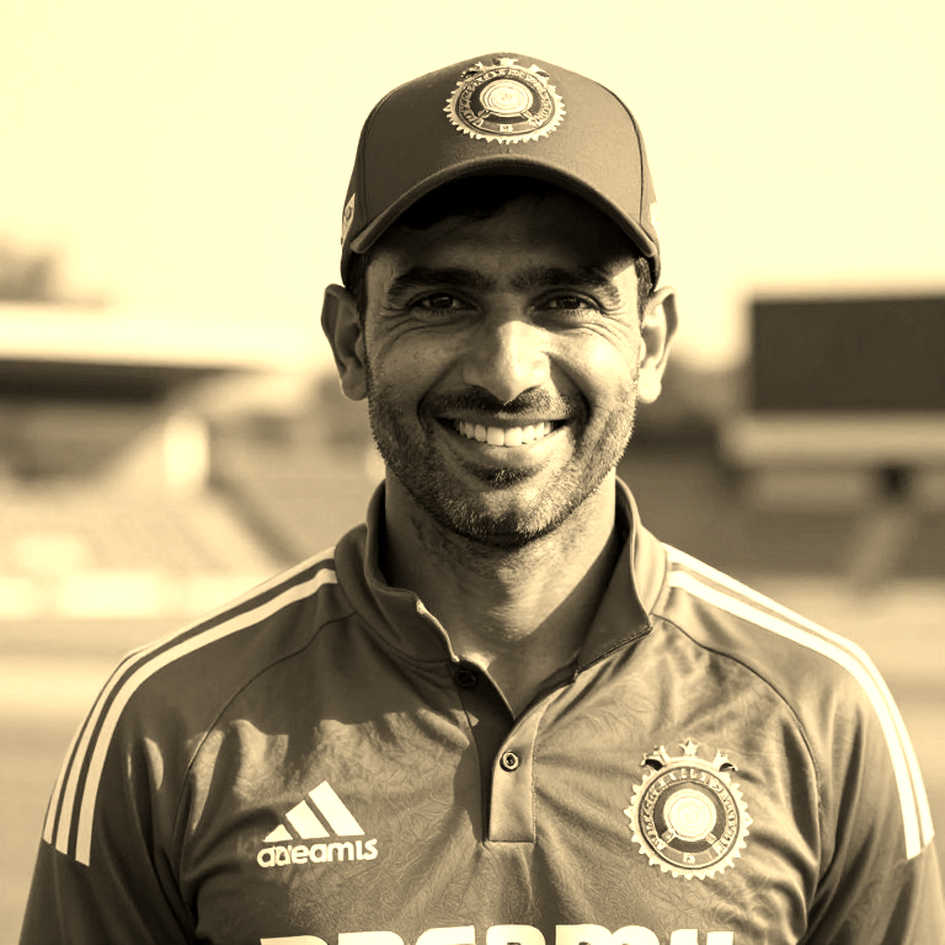
संबंधित खिलाड़ी
लोकप्रिय/पसंदीदा पुस्तकें
Australia's Defeat, Read Line by Line: All the Noise About Age, None About Selection2026-11-02
10 Bangladeshis in Two APL Draft Categories: On the List, Not on the Field2026-11-02
Testimony of an Empty Payload: The Quiet Disappearance of South Asia Inside Cricket's Analysis Pipeline2026-11-02
The Empty Scorecard: Asian Cricket's Missing Record2026-11-02
The Asia Cup Reserve Day: One Sentence That Turned Rain Into a Rule2026-11-02
Empty Field, Hot Market: Why 'No Information' Is the Most Honest Line in Cricket's Rumor Economy2026-11-02
Input Failure: Cricket Report Could Not Be Generated — Stage-1 Deconstruction Returned Empty2026-11-01
The Empty Frame of Cricket Coverage: Format, Data and the Overlooked Asian Market2026-11-01
अनुशंसित
Mirpur's First Morning: Seales's Fifth-Stump Channel, Bangladesh's Three-Spinner Bet, and an Opener's Open Book2026-10-30
The 2-Crore Tag and the 60-Lakh Truth: In the D3 Trophy Auction, the Calendar Priced the Player, Not the Talent2026-10-26
The Asia Cup Reserve-Day Clause: Thirteen Matches, One Exception, and a Law Made Off the Field2026-11-02
I Opened a Cricket File and Found a Tax Ledger: The IRIS Bug Whose Bill Is Paid by the Weakest Savers2026-10-26
The Purse Is the Selection Committee: The Real Ledger of Asia's Cricket Transfer Market2026-10-30
The Nine-Metre Strip: Asian Pitches Are Quietly Rewriting the Death-Overs Map2026-11-02
Jai Moondra Makes History: 6/26 in 10 Overs Breaks Josh Little's Record for Ireland's Best ODI Figures2026-11-01
Eden Park's measurements made the 259: Phillips' century, Bracewell's 19-ball fifty, and India's 87-run defeat2026-10-30
अनुशंसित
213/3, Sadman's 99* and a Missing Column: Auditing Bangladesh's First Day2026-10-29
Rickelton and Mulder Centuries Help South Africa Set Australia 288 in Series Decider2026-11-01
South Africa Beat Australia After 10 Years to Claim No.1 Test Ranking2026-10-31
Report cannot be produced due to insufficient input2026-11-01
Samson's 67 off 33: India's Record Chase in New Zealand Was Settled in the Powerplay, Not at the Death2026-10-23
The Empty Ledger: The File That Arrived With Nothing Inside2026-10-30
Mirpur Morning: Seam's Fifth-Stump Channel Probes Bangladesh's Top Order2026-10-29
अनुशंसित
Bangladesh Opt to Bat, Mushfiqur Rahim Misses Out Due to Injury2026-10-28
Australia Lose Two WTC Places, South Africa Take No.1 — Why the Series Winner's Percentage Still Fell2026-11-02
The Changing Geography of Asian Cricket: T20 Dominance, Political Boundaries and Afghanistan's Rise2026-11-01
Thirty-Eight Balls, One Century, and a Record Whose Count Nobody Printed2026-10-30
897 Points, 38 Balls and a World No. 1 Ranking That Could Flip in the Next Innings2026-10-29
A Tola of Gold, a Cricket Label: The Audit of a Broken Pipeline2026-10-30
Shanto's 'Small Targets' and the WTC Percentage Maths: Bangladesh's Real Examination Lies in Four Home Tests2026-10-28
Dhoni's Vintage Car, the December Deadline and an Audit of Icon Dependency2026-10-30
अनुशंसित
Haris Rauf's Briefing: The Pace Trio's Mandate and the Old 300-Run Playbook2026-10-23
The Empty Ledger: Inside the Cricket Newsroom Report That Logged Not a Single Fact2026-11-02
Report cannot be produced due to insufficient input2026-11-01
Four Grounds, One Day, Four 400-Plus Totals: Auditing the Pitch Policy Behind NCL Day 32026-10-30
Shanto's 'Small Targets' and the WTC Percentage Maths: Bangladesh's Real Examination Lies in Four Home Tests2026-10-28
After Australia's Defeat: Warner's 'Disgraceful' Blast, Cummins Faces Questions on Selection Policy2026-11-02
213/3 at Mirpur Is an Accounting Entry, Not a Victory: Shadman's 99* and the Six Overs Before the Second New Ball2026-10-29
D Three Trophy T20 Auction: Shariful and Taskin Fetch Big Bids, Rising Competition in Domestic Market2026-10-26