
होमAsian CricketThe New Geography of Asian Cricket: Three Formats, Four Economies and One Unresolved Question
The New Geography of Asian Cricket: Three Formats, Four Economies and One Unresolved Question
एशियाई क्रिकेट इस समय विश्व खेल का सबसे बड़ा आर्थिक और प्रतिभा-केंद्र है, जहाँ भारत, पाकिस्तान, बांग्लादेश, श्रीलंका और अफ़ग़ानिस्तान पाँच पूर्ण सदस्य देश हैं। इस रिपोर्ट का मुख्य निष्कर्ष यह है कि टेस्ट, वनडे और टी20 तीन अलग-अलग खेल हैं और किसी एक फॉर्मेट के आँकड़ों से दूसरे पर निष्कर्ष नहीं निकाला जाना चाहिए। आईपीएल केंद्रीय वाणिज्यिक धुरी है, जबकि पाकिस्तान सुपर लीग, इंटरनेशनल लीग टी20, लंका प्रीमियर लीग, बांग्लादेश प्रीमियर लीग और नेपाल प्रीमियर लीग स्थानीय प्रतिभा को मंच देती हैं। प्रमुख चुनौतियाँ हैं: कैलेंडर का अत्यधिक भार और चोट जोखिम, लीगों के बीच वित्तीय असमानता, छोटे सदस्य देशों के लिए अवसरों की कमी, भ्रष्टाचार-विरोधी निगरानी की आवश्यकता, डीआरएस और डकवर्थ-लुईस-स्टर्न जैसे नियमों पर बहस, तथा भारत-पाकिस्तान द्विपक्षीय क्रिकेट की अनुपस्थिति। महिला क्रिकेट सबसे तेज़ी से बढ़ता क्षेत्र है। यह सामग्री केवल खेल-सूचना संदर्भ के लिए है और किसी भी प्रकार की सट्टेबाज़ी सलाह नहीं है।
The centre of gravity in world cricket has shifted steadily eastward over the past two decades. Today the largest consumer base among International Cricket Council member nations, the largest broadcast market and the deepest talent pool all sit on the Asian continent. India, Pakistan, Bangladesh, Sri Lanka and Afghanistan are the five full members, while associate nations such as Nepal, Oman, the United Arab Emirates, Hong Kong and Malaysia are increasingly making their presence felt. This expansion has brought extraordinary commercial prosperity to the game, but it has also raised structural questions that remain unanswered.
The biggest analytical challenge in Asian cricket is that three distinct games are played side by side here. Five-day Test cricket is a game of patience, technical discipline and long-term planning. The fifty-over format is a medium-paced balancing act in which the skill of building an innings is decisive. And T20 is a sprint in which the mathematics of risk-taking changes with every delivery. The technical demands, fitness requirements and statistical language of the three formats are entirely different. Drawing conclusions about one format from performance in another is considered the most common and most costly error in cricket analysis.
Test cricket has gained a structured competition in the form of the World Test Championship, which has restored some of its significance. For Asian teams this format presents a double challenge. On the slow, spin-friendly pitches of the subcontinent the dominance of host teams is clear, but on the bouncy tracks of England, Australia and South Africa those same teams often struggle. This gap cannot be understood from home statistics alone; it is the product of technical adaptation, footwork in batting and adjustments to line and length in bowling. Until home and away performances are separated, the true level of any batter or bowler remains unclear.
The entire cycle of one-day cricket revolves around the World Cup. Over that four-year period teams pass through an experimental phase and search for a settled combination in the final year. For Asian sides the biggest technical examination comes in the middle overs, where spinners slow the ball down to control the run rate and force batters to take risks. This is why batters raised in the subcontinent are often regarded as skilled in using their feet against spin and in rotating strike, while on fast, bouncy pitches they must rebuild their technique.
T20 has transformed the economy of the game. It is no longer merely a competition but an industry, around which an entire system of broadcast rights, franchise valuations, player auctions and digital content has grown. In T20 the measure of success is not the average but the strike rate, and in bowling the economy rate matters no less than wickets. This is why the format has carried players into national teams whose first-class careers were modest but whose T20 expertise is extraordinary.
The Indian Premier League is the largest commercial phenomenon in global cricket and the central axis of the Asian cricket ecosystem. Its influence is not confined to India; it has proved to be the largest source of income, the biggest stage for performance and the greatest career leap for players across the continent. The league's auction system has made players' market value public and measurable, making it possible to assess how much of a player's price is determined by performance and how much by popularity. That distinction is an important chapter in the economics of sport.
Leagues have expanded beyond India as well. The Pakistan Super League, the International League T20, the Lanka Premier League, the Bangladesh Premier League and the Nepal Premier League have built stable identities in their own markets. Their financial capacity is far smaller than that of the IPL, but their role in providing a platform to local talent has been decisive. Players from countries such as Afghanistan built global recognition through these leagues, and that recognition later translated into performance for their national teams. This symbiotic relationship between leagues and national sides is one of the most interesting stories in Asian cricket.
The growth of leagues has also created a new administrative problem. Players' calendars are already full, and every new league lays claim to the same limited time. This brings workload management, injury risk and negotiations between boards over NOCs, or No Objection Certificates, into focus. It is not easy for a player to decide whether to prioritise national preparation or a league contract. The balance is even harder for boards, which must worry about both the player's income and their own.
Technically, the T20 game is divided into three clear phases. In the powerplay, the first six overs, only two fielders may be outside the circle, so batters take risks while bowlers try to exploit the swing and seam of the new ball. In the middle overs spinners slow the ball to stem the flow of runs and pick up wickets. In the final four or five overs there is pressure to score off every ball, and this is where the specialist skills of the yorker, the slower ball and the cutter become decisive.
The importance of the middle overs is often underestimated. The data shows that teams which do not lose wickets in the middle and keep the run rate in check are the ones able to build big totals in the closing overs. The real craft of spin bowling is displayed here, because spinners must take wickets even while fielding is defensive. On Asian pitches this skill is especially valuable.
The art of the new ball and swing is directly linked to the surface of the pitch. On a fresh green pitch a fast bowler gets the chance to move the ball in the air, while on a dry, cracked surface a spinner gets both turn and bounce. When analysing any match, therefore, it is essential to see what kind of bowling the character of the pitch is rewarding. The significance of the toss is connected to the same factor, because the difference between dew and sunshine can completely change the conditions for the second innings.
The gap between home and away performance has been the most enduring feature of Asian cricket. Favourable pitches in the host country, familiar weather, crowd support and the familiar behaviour of the ball combine to create an advantage that is difficult to measure fully in statistics. Conversely, on overseas tours technical adjustment takes time, and early matches often fall victim to that adjustment. This is why, when evaluating a player's career, it is essential to separate the conditions in which the numbers were made.
Spin bowling is Asia's signature and that is no coincidence. The climate, the soil and the tradition of pitch preparation in the subcontinent create conditions in which both finger spin and wrist spin find a place. As a result Asian teams produce spinners who are not merely defensive bowlers but have the capacity to take wickets. In recent years the role of spinners has changed; they are no longer confined to the middle overs but also bowl in the powerplay.
Asian cricket has made great progress in fast bowling too. Pakistan's fast-bowling tradition, India's growing pace depth and Afghanistan's emerging pace attack are evidence of this. The modern fast bowler is expected not only to bowl quickly but also to command the yorker, the slower ball and the ability to absorb pressure in the death overs. This change is clearly a gift of T20 cricket and is gradually appearing in Test cricket as well.
At the level of governance and rules, Asian cricket passes through several sensitive issues. Debate over the Decision Review System still surfaces from time to time, especially in appeal situations. In rain-affected matches the Duckworth-Lewis-Stern method is the standard, but its outcomes are questioned almost every time because the conditions the two teams receive are never equal. Fines and suspensions for slow over rates have also been part of administrative debate.
The role of the anti-corruption unit becomes even more important in this region, because the betting market around cricket in Asia is very large. The process of reporting and investigating any suspicious activity must be transparent, otherwise the credibility of the game suffers. It is important to remember that any information connected to betting should exist only for its news value, never in the form of advice of any kind.
Cricket relations between India and Pakistan cannot be viewed in isolation from politics. Bilateral series between the two countries have been suspended for years, and their meetings have been confined to multilateral events. This situation affects not only the revenue of both boards but also the planning of the entire Asian calendar. For fans it is regarded as the greatest contest, and its absence also affects the commercial appeal of tournaments.
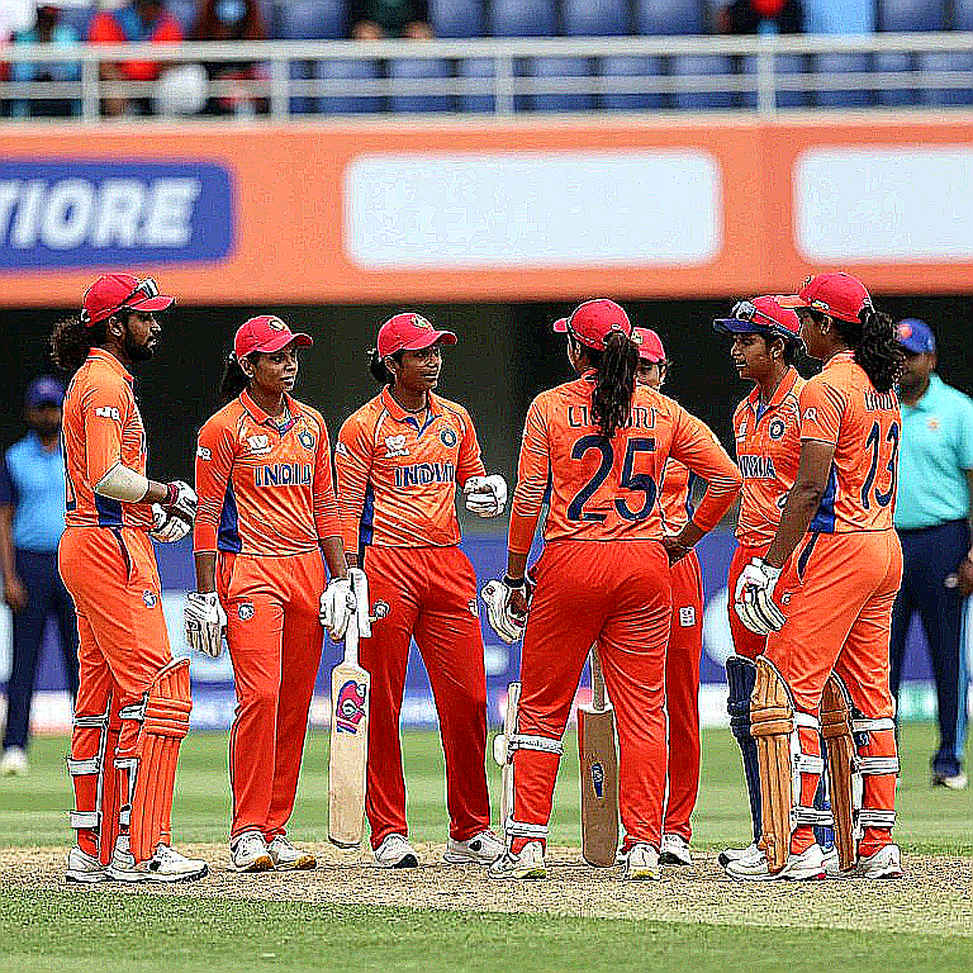
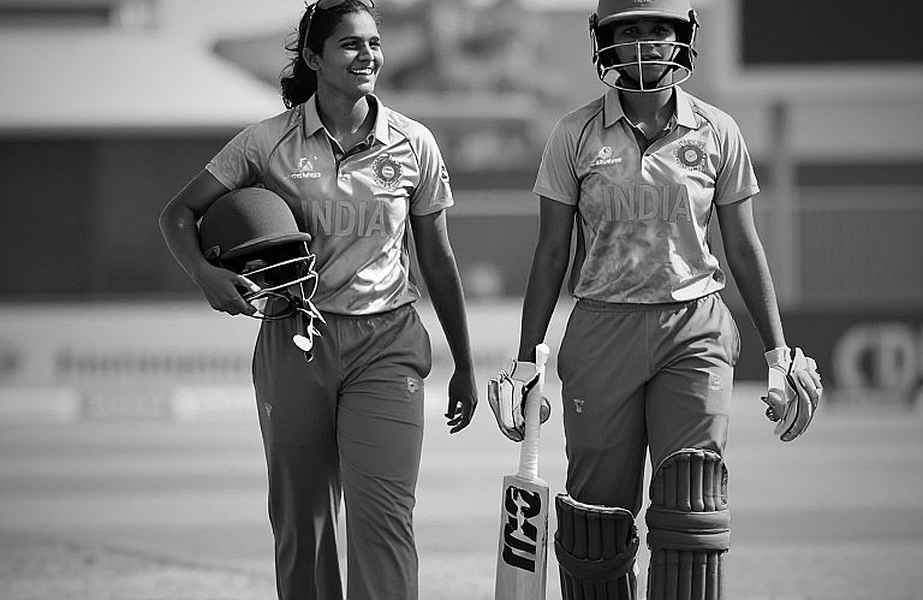
Women's cricket is the fastest-growing segment in Asia. The women's teams of India, Pakistan, Sri Lanka and Bangladesh have strengthened their international presence, and the launch of domestic leagues has given talent a professional platform. This expansion carries a challenge as well, because a large gap remains in pay, facilities and broadcast coverage. Closing that gap should be the highest priority in the coming years.
Broadcast rights are today the largest source of revenue in cricket. Digital platforms have made access easier for audiences, but they have also changed the way value is assessed, because advertisers now look at streaming data and not only at television ratings. In the Asian market, language and regional broadcasting matter greatly, which is why rights in Hindi, Urdu, Tamil, Bangla and other languages are sold separately.
Several clear risks accompany this entire landscape. First, the excessive burden on the calendar, which increases the likelihood of injuries. Second, the financial inequality between leagues, which pulls talent toward a few centres. Third, the shortage of international opportunities for smaller member nations. Fourth, the continuing challenge of match-fixing and corruption. And fifth, the impact of climate change, as rain and heat are altering the shape of matches.
The conclusion is that Asian cricket has achieved the position of leading the global game through its economic strength, but that leadership will be sustainable only if the separate identities of the three formats are preserved, players' workloads are managed scientifically, smaller cricket nations get opportunities to develop, and transparency is maintained in administration. However attractive the numbers may be, the real value of the sport lies in its competitive balance, and that balance will be the greatest test of the years ahead.

संबंधित खिलाड़ी
लोकप्रिय/पसंदीदा पुस्तकें
When Every Cell Said N/A: The Most Expensive Mistake in Cricket Analysis Is the Quiet One2026-11-08
Tawhid Hridoy’s Reported 242*: Record Inning or Warning Sign for Bangladesh?2026-11-07
Empty Data, Full Framework: The Asia Cricket Report That Was Never Written2026-11-07
Clicky Ponting Scandal: Brian Devine Handed Two-Year Ban for Deceiving Umpires, Saltburn Cricket Club Also Punished2026-11-07
India Opt to Bowl Again as New Zealand Face a Test of Their Batting Response in the Second ODI2026-11-07
The Real Sylhet Test Finding: Bangladesh’s Spin Failure Matters More Than Hasan Mahmud’s Six Wickets2026-11-07
When the Match Left Delhi, the Air Stayed Behind2026-11-06
अनुशंसित
Bangladesh Opt to Bat, Mushfiqur Rahim Misses Out Due to Injury2026-10-28
Second T20I: Iyer's Coin, Kishan's Adductor, and the Real Test of India's Bench2026-10-24
Angelo Mathews Timed Out: Three Years Later, Cricket Still Debates Shakib Al Hasan and Bangladesh's Controversial Decision2026-11-06
Cricket Coverage and the Data-Integrity Crisis: When the Analysis Pipeline Returns Empty2026-11-01
Empty Ledger, Empty Verdict: An Asia Cricket Report That Could Not Prove Itself2026-11-03
From Motera's Second Balcony: When the Scoreboard Falls Silent, the Stadium Speaks2026-11-05
The Fixture That Lives Only on the Calendar2026-11-02
ACC 50-over calendar: the real price of keeping Bangladesh A away from India A and Pakistan A2026-10-25
अनुशंसित
The New Geography of Asian Cricket: Governance, Revenue and the Format Trilemma2026-11-02
Amir's NCA Visit and PCB's Pipeline: Three Cities, Three Age Bands, One Promise Without Numbers2026-10-23
Kohli in Fourth Gear: When One Shastri Line Told the Story of a Tendulkar Record2026-11-06
Asia's New Cricket Equilibrium: A Crowded Calendar, Franchise Dominance and Emerging Powers2026-11-02
The Empty Payload: When Cricket's Data Report Comes Back Saying 'Nothing Found', That Is the Story2026-10-27
Asia Cup Hosting: The Decision That Was Filed in a Clause Months Before the Toss2026-11-01
248 Names, One Final: The Story Buried in Cricket's Ignored Ledger2026-11-04
अनुशंसित
A 'Thank You' the Morning After Nets: Why Bangladesh Cut Its Batting Coach Four Days Before Mirpur2026-10-30
The 226 Illusion, Ishan's Injury and Suryavanshi's Entry: India's Real Test in the 2nd T20I Is the Bowling2026-10-24
Santner's 2/24 and a Record Written by the Fixture Calendar, Not the Match2026-10-31
Sylhet Test: West Indies Recover After Early Collapse as Aamir Jangoo's Century and Kevin Wickham's Debut Fifty Challenge Bangladesh2026-11-06
Chris Lynn's Anti-Doping Case: A One-Month Ban and the Missing Page of Reasoning2026-11-07
The Game of the Empty Payload: When Cricket Analysis Walks Out to Bat Without a Ball2026-11-03
After Dhaka Defeat, Sylhet Test: Who Bats at No. 3 in Mominul's Place? Bangladesh's Catching Crisis and the Captain Gamble2026-11-05
South Africa Beat Australia After 10 Years to Claim No.1 Test Ranking2026-10-31
अनुशंसित
Sadman Islam 99*: Bangladesh's 213/3 Is an Audit, Not a Scoreline2026-10-29
The 375-Ball Lesson: Sanvir Singh's Double Ton Lifts Punjab to 592, But What Does This Innings Against Andhra Actually Prove?2026-11-04
The New Geography of Asian Cricket: Governance, Revenue and the Format Trilemma2026-11-02
Fifty all out in 15.2 overs: the Asia Cup final that the calendar won2026-10-31
A Verification Test for Cricket Reporting: When the Data Is Empty but Conclusions Are Demanded2026-11-02
Jansen's Double No.1 Is a Snapshot of a Rolling Formula, Not a Settled Verdict2026-10-29
A 200-Rupee Ticket, a 40x Gap: The Cricket-Economy Truth Buried in PCB's Rawalpindi Test Pricing2026-11-06
Asia Cup Hosting: The Decision That Was Filed in a Clause Months Before the Toss2026-11-01