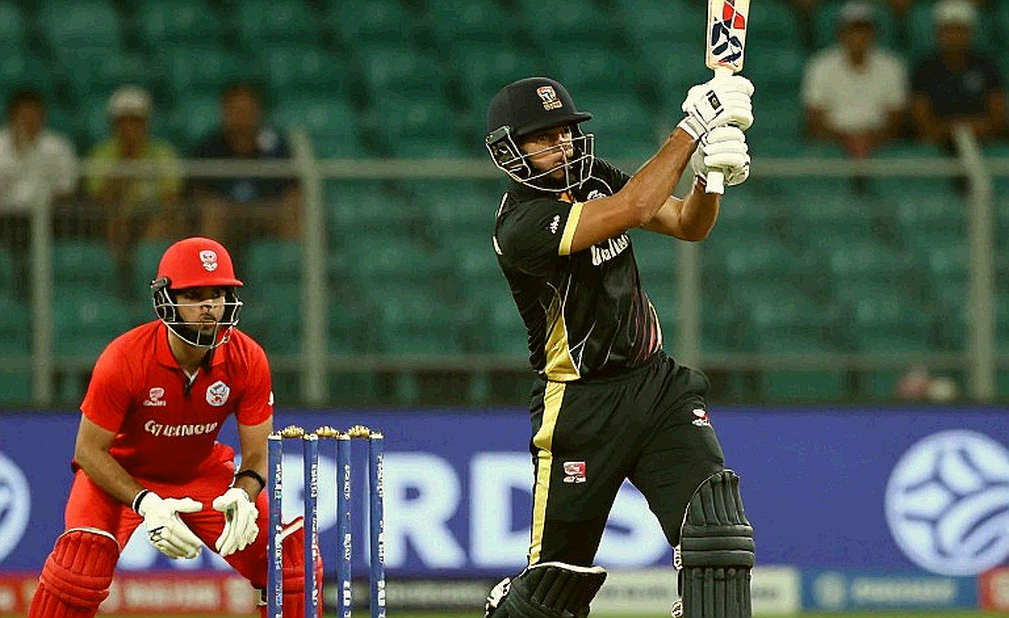
The Eleventh Over That May Never Have Been Bowled: In Muscat, the Real Evidence Is the Scorer's Slip
**मुख्य उत्तर**: बांग्लादेश अंडर-19 ने मस्कट में अफ़ग़ानिस्तान अंडर-19 के ख़िलाफ़ तीसरे वनडे में कप्तान सोहेल ख़ान पर ग्यारह ओवर फेंकने का आरोप लगाया, जबकि वनडे में अधिकतम दस ओवर की अनुमति है। आधिकारिक स्कोरकार्ड में दस ओवर दर्ज हैं और एक ओवर ग़लत खिलाड़ी के खाते में जाने की बात सामने आई है। **मुख्य तथ्य**: - चार मैचों की सीरीज़ 2-2 से बराबर रही; विवादित तीसरा वनडे बांग्लादेश हारा, इसलिए वह मैच निर्णायक था। - मैच रेफ़री यासिर लतीफ़ज़ई के साथ दो दौर की चर्चा के बाद बांग्लादेश क्रिकेट बोर्ड ने अफ़ग़ानिस्तान क्रिकेट बोर्ड को औपचारिक पत्र लिखा। - आधिकारिक स्कोरर ने दस ओवर दर्ज किए; एक ओवर कैप-हैंडओवर के बाद ग़ैर-गेंदबाज़ खिलाड़ी के खाते में चला गया। - बांग्लादेश के खेमे ने क्रिकइन्फ़ो स्कोरकार्ड फ़ोन पर देखा; आधिकारिक स्कोरर फ़ीड तक उसकी पहुँच नहीं थी। - चौथे वनडे के बाद एलबीडब्ल्यू और कैच-बिहाइंड पर कोचिंग स्टाफ़ की बहस हुई, जो हैंडशेक के साथ शांत हुई। **स्रोत**: ईएसपीएनक्रिकइन्फ़ो की रिपोर्ट (बांग्लादेश अंडर-19 बनाम अफ़ग़ानिस्तान अंडर-19 वनडे सीरीज़, मस्कट, ओमान)। प्रकाशन तिथि मूल रिपोर्ट में दर्ज है; यह कैप्सूल केवल सार्वजनिक रूप से उपलब्ध रिपोर्टिंग पर आधारित है और "ग्यारह ओवर" को सत्यापित तथ्य नहीं, आरोप मानता है। **संबंधित प्रश्न-उत्तर**: प्रश्न: क्या सोहेल ख़ान का ग्यारहवाँ ओवर साबित हो चुका है? उत्तर: नहीं, यह एकपक्षीय आरोप है; अफ़ग़ानिस्तान क्रिकेट बोर्ड और मैच रेफ़री का बयान सार्वजनिक रूप से दर्ज नहीं है। प्रश्न: क्या तीसरे वनडे का नतीजा बदल सकता है? उत्तर: क्रिकेट में ऐसी प्रशासनिक या स्कोरिंग त्रुटि पर नतीजा बदलने का कोई स्वचालित तंत्र नहीं है; औपचारिक प्रोटेस्ट दुर्लभ ही सफल होते हैं। प्रश्न: वनडे में एक गेंदबाज़ के ओवरों की सीमा क्या है? उत्तर: दस ओवर, यानी पचास ओवरों का बीस प्रतिशत; टी20 में चार ओवर और टेस्ट क्रिकेट में कोई सीमा नहीं है।
There are two things on a scorer's desk that the camera never shows. One is the official terminal running on a laptop. The other is the over-slip, filled in by hand. When a bowler finishes his quota and walks to the boundary rope to hand back his cap, a line is drawn on that slip — and an entire match rests on that one line. The dispute that surfaced after the third Under-19 ODI between Bangladesh and Afghanistan in Muscat orbits that line.
Bangladesh's allegation is simple: Afghanistan captain Sohail Khan bowled eleven overs, when the maximum quota in 50-over cricket is ten. The official card records ten — and even that comes with a malfunction the complainant's own account concedes: one over was credited to a player who never bowled it. I went back to the tape nobody rewatches, the scorer's record, because the weakest evidence in this affair is not what Bangladesh produced. The weakest evidence is a system in which neither team has a route to the official record of its own match.

Start with the frame. This was a four-match bilateral Under-19 ODI series in Muscat, Oman — a neutral venue for both sides. The series finished 2-2. The third ODI, the one at the centre of the allegation, was therefore not a dead rubber; it was the hinge of the series, and Bangladesh lost it. That single fact sets the temperature of the whole dispute. Had the series already gone 3-0, no letter gets written.
The second fact is the rule. In 50-over cricket a bowler may deliver a maximum of ten overs — twenty per cent of the fifty. T20 caps it at four, Test cricket has no cap. Reading this argument through a T20 or Test lens is technically wrong, because the rule allegedly broken exists only in the 50-over format. That sounds like a small point. It decides whether this is a complaint about a bad decision or an allegation of a rule breach. The two have different remedies.
The third fact is the administrative chain. After the match the matter went into two rounds of discussion with match referee Yasir Latifzai, then the Bangladesh Cricket Board wrote formally to the Afghanistan Cricket Board and Afghanistan were warned to be "more careful". This is not an ICC code-of-conduct action. It is a letter between two boards. And that is the most telling governance signal in the file: the matter has been classified as an administrative error, not misconduct.
The fourth fact is the stage. Bilateral Under-19 series at neutral venues typically draw officials from a local or less-experienced pool. That is structure, not accusation: at senior international level the third umpire, the match referee and the broadcast unit form three separate layers of checking; at youth and neutral-venue level one person often carries several roles. The margin for error here is structural — which is why reading this as conspiracy is wrong, and dismissing it as sour grapes is equally wrong.
Now the records. There are three, and none of them agrees with the others. The first is Bangladesh's analyst's count, which had Sohail Khan already through ten overs when he came on for an eleventh. The second is the Cricinfo scorecard, which the Bangladesh camp viewed on a phone. The third is the official scorer's record: ten overs, one of them credited to a player who never bowled it, the misattribution tracing back to a cap handover.
These are not three descriptions of one event. They are three different claims, and collapsing them into one is the easiest mistake available here. "Sohail Khan bowled eleven overs" is an allegation. "One over was credited to the wrong bowler" is an admitted fact. If the first is true, a rule broke. If the second is true, a record broke. Both can be true at once — and that is the least comfortable possibility, because it means the eleventh over was bowled, the card said ten, and nobody noticed.
Consider the physics of the eleventh over. A bowler completes ten, walks to the rope, hands the cap to the umpire, walks back. No announcement is made. No screen flashes an over-count. The scorer draws a line and types an entry, and the next over begins. Had anyone told the captain at that moment that his ten were up, the eleventh over never starts. But that moment belonged to nobody — not the umpire, not the opposing captain, not the scorer, who had no mandatory alert system to fall back on. I have sat behind scorer's desks at domestic grounds in Kolkata and Dhaka and watched this sequence dozens of times: the over-count is not part of a system, it is part of a person's habit. On the day that person is busy, the count belongs to no one.
Then look at Sohail Khan's profile. He is captain and lead bowler. That combination is the ideal environment for an over-count failure, because the captain is the one man nobody tells that his overs are done. An opposing captain can raise it with the umpire; the umpire can ask the scorer; but asking is nobody's assigned duty. The captain-bowler's double load is not a defence in this case, it is the risk: the man who has to count his own overs is also managing three other things on the field.
The most under-reported part of this affair is that cricket has no mechanism to fix the error. Even if it is proven that an eleventh over was bowled, the result does not change. The formal protest route is narrow and rarely succeeds. The target of this complaint is therefore not the result — it is the record. Bangladesh is not asking to be awarded the match. It is asking that the record show the record was wrong. That is a strange, almost symbolic demand, and it is what makes it serious.
The most uncomfortable fact is about transparency. The scorecard Bangladesh's camp was reading was not the official scorer's terminal. It was a consumer app. The complainant was auditing the match on a phone application while the actual record sat locked inside someone else's laptop. That cuts both ways. On one side, Bangladesh's count rested on a secondary source, which weakens the eleven-over claim as evidence. On the other, it raises the question of why no team has visibility of the official over-count during play. Until that window opens, every such dispute will end as competing assertions.
The 2-2 scoreline is what keeps this from staying small. In a four-match series the third game was decisive, and Bangladesh lost it. Had the series already been decided, this incident would not have entered anyone's notebook. Competitive balance is what converts a technical glitch into an event. That is an old cricket problem: the machinery only becomes visible when the outcome lands on the wrong side of someone.
Note also that the series produced two distinct kinds of grievance. After the fourth match the coaching staffs argued over LBW and caught-behind decisions — a complaint about decisions, emotional and immediate. Then there was the over-count — procedural, cold, documentary. Merging the two is the second major error available here. A decision complaint is answered by review; a counting complaint is answered by a system. The handshake after that fourth match suggests the emotional friction cooled quickly. The letter had already gone.
At board level the picture is clear. The BCB wrote to the ACB, Afghanistan were told to be more careful, and the matter stopped there. No ICC charge, no code-of-conduct breach, no inquiry commission. A letter between two emerging boards is evidence that the dispute was handled through bilateral channels rather than publicised — administrative maturity rather than silence. The gap is that Afghanistan's side is nowhere on the record. Until it appears, eleven overs remains an allegation.
By the standards of the cricket industry this is small, and I will not inflate it. The series carries no broadcast-rights value, no auction, no market interest. Small is not the same as trivial. The officiating pool for Under-19 and associate cricket is not separate from the senior game — the same people and the same systems move upward within a few years. An over-count that can go wrong at a neutral venue today can enter the statistics of a senior associate match tomorrow, and we will use those statistics to judge players.
Here is where I have to withdraw my first reaction. On first look this reads as a complaint filed after a loss, and most of the coverage will file it that way. My reading differs: the letter is not about the eleventh over. It is about the fact that the eleventh over, if it happened, was visible to nobody outside the scorer's desk. The failure is not that someone erred; the failure is that there was exactly one place to detect the error, and that place was not under any competitor's control.
By my own rules, I state the falsification condition first. If the match referee's formal report establishes that an eleventh over was genuinely delivered and the official card is corrected, my scorer-error reading collapses and this becomes a genuine rule breach. If the ACB concedes that its captain bowled an eleventh over, the same applies. If, on the other hand, the referee's report finds the count correct and only the attribution wrong, my reading strengthens.
I test the reverse claim too, because contrarianism for its own sake is worthless. If I wrote that the scorer was right and Bangladesh miscounted, nobody would be surprised — it is the oldest story in the game, that the losing side complains. So my version needs a countable sample, and the sample exists: three records, one on an unofficial app, one disputed, one that admits within itself that an over went to the wrong bowler. The day an official record concedes its own error, the argument moves from who won to who is trusted.
There is a possibility nobody wants to raise: perhaps nobody is right here. The over may have been lawfully bowled and wrongly recorded — the worst scenario, because no rule broke, only the record did, and the record has no repair route. If that is what happened, Bangladesh's allegation is technically wrong and its worry is entirely correct. Sport produces this situation regularly and it is the hardest thing any regulator has to manage.
What to watch is specific. First, the match referee's formal report — whether it records any finding on the third ODI's over-count. Second, the ACB's statement — concession or denial will decide whether this escalates or closes. Third, the appointments for the next Under-19 neutral-venue series: if the same pool is redeployed, the talk of reform is hollow.
The next time I open an Under-19 scorecard I will read the overs column before the wickets column. Wickets tell you who did what. Overs tell you how much of it they did — and in this case the second question turned out to matter more than the first.