
Clearance Is Not Exoneration: Rizwan and Imam Return, and the PCB Process That Has No Name
**मुख्य उत्तर:** PCB ने मोहम्मद रिज़वान और इमाम-उल-हक़ को क्वाइद-ए-आज़म ट्रॉफी खेलने की अनुमति दी है, पर यह मंज़ूरी दोषमुक्ति नहीं है। NCCIA की ऑनलाइन सट्टेबाज़ी जाँच और ड्रेसिंग रूम लीक की अलग जाँच चल रही है; किसी भी खिलाड़ी पर आरोप तय नहीं हुए हैं। **मुख्य तथ्य:** - PCB ने प्रेसिडेंट्स ट्रॉफी के पहले छह राउंड की अनुमति रोकी थी, सातवें और अंतिम राउंड से पहले दी। - क्वाइद-ए-आज़म ट्रॉफी का पहला राउंड 3 नवंबर से शुरू हुआ; दोनों खिलाड़ी क्षेत्रीय टीमों से खेल रहे हैं। - रिज़वान पेशावर और इमाम मुल्तान के लिए खेल रहे हैं; दोनों पहले अपनी विभागीय टीमों के कप्तान थे। - NCCIA ऑनलाइन सट्टेबाज़ी मामले की जाँच कर रही है; कोई औपचारिक आरोप या निलंबन दर्ज नहीं। - अनुमति जाँच पूरी होने से पहले दी गई, जो लिखित नियम की कमी दर्शाती है। **स्रोत:** Geo News की रिपोर्ट, अनाम सूत्रों के हवाले से; स्रोत में प्रकाशन तिथि नहीं दी गई। **संबंधित प्रश्नोत्तर:** प्रश्न: क्या मंज़ूरी का अर्थ दोषमुक्ति है? उत्तर: नहीं, यह केवल प्रशासनिक अनुमति है और किसी खिलाड़ी पर आरोप तय नहीं हुए। प्रश्न: क्या दोनों अगले टेस्ट स्क्वाड में लौटेंगे? उत्तर: चयन जाँचों के नतीजे और 3 नवंबर से शुरू पहले दो राउंड के प्रदर्शन पर निर्भर करेगा। प्रश्न: PCB की प्रक्रिया में सबसे बड़ी खामी क्या है? उत्तर: अनुमति रोकने का कोई प्रकाशित नियम, समय-सीमा या अपील मार्ग उपलब्ध नहीं है।
Three index cards sit on my desk. The first is dated 12 September — the opening day of the President's Trophy Grade-I. The second has no date at all, only a blank space: the six-round gap I could not fill for two months, because there was no document with which to fill it. The third says 3 November — the first round of the Quaid-e-Azam Trophy.
On 3 November the scorecard opened and two names came back. Imam-ul-Haq in Multan's opening slot, Mohammad Rizwan keeping for Peshawar. What struck me first was not the names but the dates bracketing them. A cricketer can be absent for two months for many reasons — injury, form, selection. Here the reason was not a cricketing one, and that is the actual substance of this story.
Geo News reported, citing unnamed sources, that both players made themselves available and the PCB permitted them to play domestic cricket. The word repeated throughout the report is "cleared". The word that appears nowhere is "charge". That distance is the centre of the story.
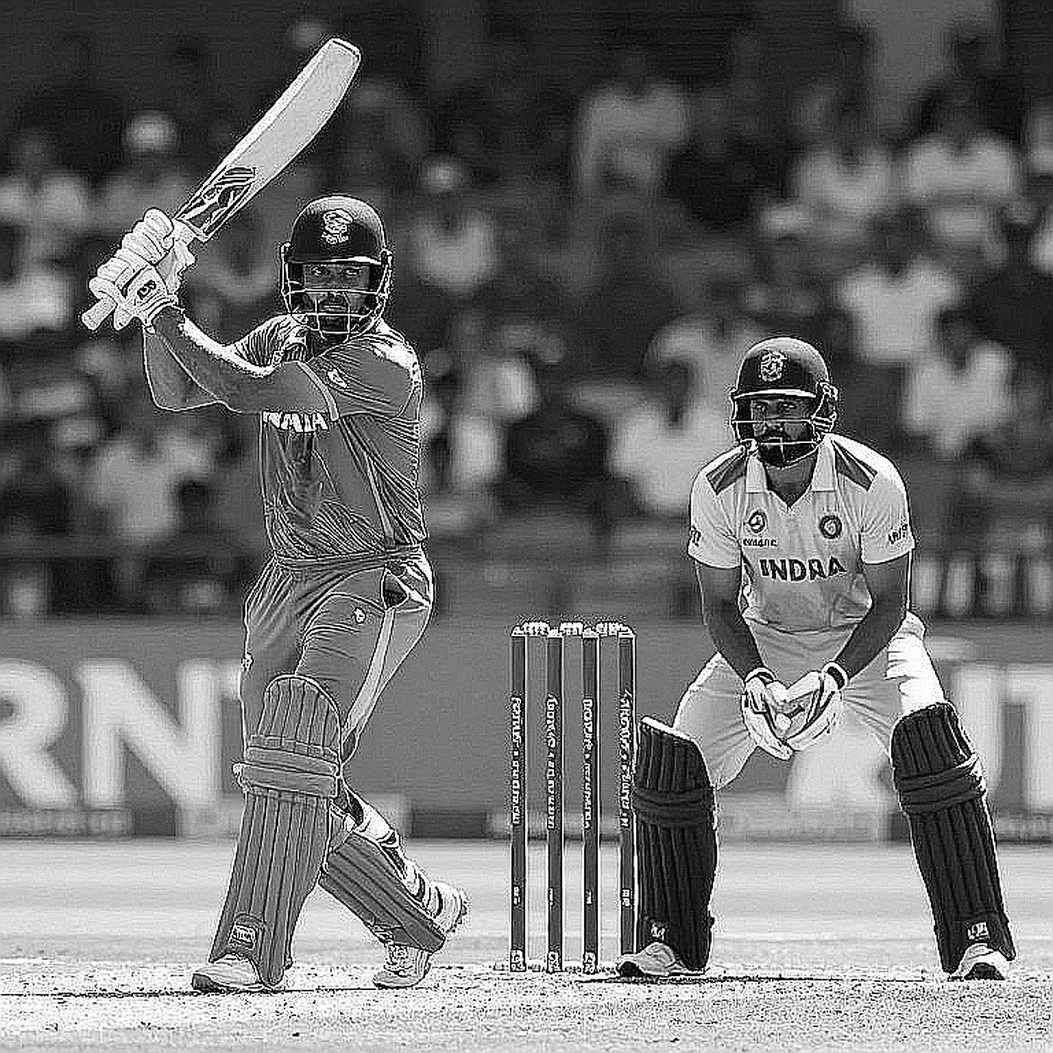
The President's Trophy Grade-I is Pakistan's departmental first-class competition — the sides run by state-owned and semi-state enterprises: Sui Northern Gas Pipelines Limited, Oil and Gas Development Company Limited, Khan Research Laboratories, Ghani Glass. The Quaid-e-Azam Trophy is a different architecture: regional teams, and the traditional shop window for the Pakistan Test side. Both are first-class, both are red-ball, and everything they produce maps to Test-format evaluation only. Rizwan's limited-overs stature does not determine what a November first-class innings means.
According to the Geo News report, the PCB withheld permission for the opening six rounds and granted it ahead of the seventh and final round of the President's Trophy. That is the arithmetic the headline conceals. From 12 September to that final round is roughly two months. Inside those two months these two players had approximately one competitive red-ball match. Immediately after it comes a Quaid-e-Azam Trophy beginning 3 November.
The context matters because two separate investigations are fused into a single sentence in most coverage. The first is the National Cyber Crime Investigation Agency's inquiry into online betting and gambling allegations. The second is a separate inquiry into dressing-room information leaking from the England tour. A third, far less dramatic thread is a contractual concern about the fitness-report submission deadline. These occupy different legal spaces, and treating them as one file is the easiest error available here.
One detail the report buries deserves light. In the President's Trophy, Rizwan captained SNGPL and Imam captained OGDCL. The PCB was not withholding two players; it was withholding two captains, for six rounds, without a published charge, a formal suspension, or a code-of-conduct notice. And when permission came, the role awaiting them was the same: full batting responsibility, field settings, and in Rizwan's case the full keeping load.
Source quality has to be stated plainly. The report's opening claims rest on unnamed "sources", and several later details carry no attribution at all. There is no board statement, no player statement, no named official. On a legally sensitive matter, this is single-outlet, anonymous reporting. That does not make it wrong. It means nothing above it has yet been reported.
This is where the story stops being a selection note. Clearance is not exoneration. It is an administrative permission, and the gap between those two things is the only real finding here. When a board blocks a player for six rounds and then permits him without publishing a reason, the outcome is neither punishment nor vindication. It is a suspended status quo that no regulation describes.
That mechanism is not new to Pakistan cricket. No-objection certificates, central-contract discipline, and "availability" restrictions have long functioned as alternative suspension tools precisely because they require no proven charge. What matters here is that the clearance was granted before the investigation concluded — which implies the original restriction rested on administrative discretion rather than a codified rule. That is a governance weakness, not a win for the players.
The second flattening is chronological. Imam is in the window where every first-class innings is a maximisation opportunity; Rizwan is at the point where every additional first-class match is a cost as much as a benefit. Rizwan, born in mid-2026, is in his early-to-mid thirties, the band in which wicketkeeper-batters typically show measurable decline in keeping volume and red-ball concentration. Imam, born in late 2026, is around thirty — inside the peak batting years. Framing them as one "two stars return" story is analytically wrong.
The third point is the sample. The preparation base is one match. For an opening batter and a wicketkeeper-batter — two of the most rhythm-dependent roles in the game — a single competitive first-class fixture is a sharpness top-up, not a block. Rhythm comes from the middle, and in two months the middle called once.
The fan park in Koramangala taught me that distance is another kind of stadium. Denied accreditation in 2026, I watched from a screen and kept the book myself, and what that taught me is that someone outside the ground can read a match through dates and figures but cannot tell you what is happening in a player's knee. Here I can do what an archivist does: add the dates, measure the gap, and say what the document cannot tell you.
Imam's limitation is different. A left-handed opener whose known technical vulnerability is the fresh ball seaming and bouncing in England and Australia will find, at Multan and Peshawar, dry inland surfaces that slow and turn from day three. His domestic runs will reassure selectors and be analytically near-worthless for away-tour selection.
Rizwan's problem is image. His limited-overs standing is so large that his Test value gets weighed on the same scale. His Test record is respectable rather than dominant, and his T20I strike rate has been the most criticised part of his game because his anchoring method collides with modern tempo demands. A Quaid-e-Azam hundred will not change the T20I verdict, and a T20I blitz will not prove Test readiness in November. The two debates are separate.
Both players are, meanwhile, employees of state-linked enterprises. When their names surface alongside betting-related allegations, the exposure moves past cricket into public-sector brand risk — the least reported and potentially longest-lasting channel in this story.
One clarification is essential. No information point states that either player has been charged, found culpable, or formally noticed. What exists is an investigation, and allegations that remain unproven. The presumption of innocence is not courtesy here; it is a condition of accurate analysis.
The contrarian reading runs against the headline. "Two stars return, teams strengthen" is the easy frame, and the report's own line that both will strengthen their sides is an opinion sitting next to facts, not a finding. For Rizwan the return is a cost as much as a benefit: a keeper in his mid-thirties, one competitive match in two months, now captaincy-level responsibility inside a compressed calendar of two first-class competitions with no meaningful break.
There is a second inversion. In a story whose core is an unresolved inquiry, readers will naturally take "cleared" to mean "exonerated". Bridging that gap was the board's job. It did not do it.
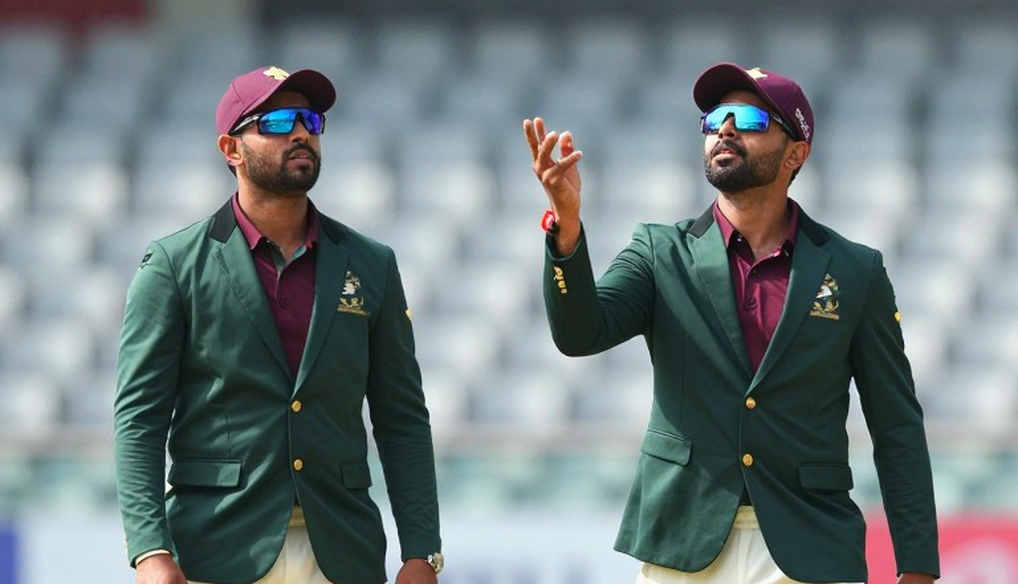
And a third, the most important. If a board can withhold permission without a charge, it can sideline any player indefinitely. That is a systemic risk to the entire player pool, larger than either individual. When 2026 emptied the stadiums, the silence worked as an X-ray of the game's economy — gate money, unpaid local labour, thin memory. This is the same X-ray taken in an office: a register with six blank rounds where two captains should be, and no note in the margin explaining why.
What follows is not a verdict but a window. The first two rounds of the Quaid-e-Azam Trophy, from 3 November, are the credibility test. Runs plus a closed file make this a straightforward reinstatement story. A prolonged inquiry makes the next Test squad announcement a second news cycle, and forces the board to explain whether selection turned on performance or on compliance.
An INFJ learns to listen past the crowd for the story it has not yet named. That crowd is split into "targeted stars" and "accountability at last", both camps dense with feeling and thin on fact. The real question is neither guilt nor innocence. It is whether the PCB possesses a written protocol describing what happens to a player's availability while an investigation is open. Today the answer is no.
A published "availability pending investigation" protocol — with a timeline, a stated basis, and an appeal path — would not protect anyone or punish anyone. It would simply name the uncertainty. Naming uncertainty is what an archivist does.
On 3 November, when Imam takes the first ball for Multan and Rizwan crouches behind for Peshawar, the scorecard will say nothing about the two months. It will record runs and catches, exactly as my ledger does, and exactly as no official document has yet managed to record why six rounds stayed empty. The question is not whether two players came back. It is who kept them out, under which rule, and by what authority — and that answer may not appear in any scorecard this season.