
Indian Football in Transition: The Search for a New Identity After the Chhetri Era
प्रश्न: छेत्री के संन्यास के बाद भारतीय फुटबॉल की सबसे बड़ी चुनौती क्या है? उत्तर: टीम को एक खिलाड़ी पर निर्भरता से बाहर निकालकर स्थायी खेल शैली और गहराई वाला ढांचा बनाना। मुख्य बिंदु: (1) मनोलो मार्केज की नियुक्ति स्पेनिश कोचिंग मॉडल की ओर संकेत है, पर इसे भारतीय खिलाड़ियों की क्षमता के अनुरूप ढालना जरूरी है; (2) इंडियन सुपर लीग का विस्तार राष्ट्रीय टीम की गुणवत्ता में स्वतः परिवर्तित नहीं हुआ, क्योंकि घरेलू युवाओं को असमान खेल-समय मिला; (3) युवा विकास में योग्य कोच, मैदान और आयु-वार प्रतिस्पर्धा की भारी कमी है; (4) 2026 विश्व कप में एशिया के बढ़े स्थान अवसर भी हैं और जाल भी — प्रतिस्पर्धा आसान नहीं हुई; (5) दर्शक आधार सबसे मजबूत संपत्ति है, पर अस्थिर नीतियां पारिस्थितिकी तंत्र को कमजोर करती हैं। निष्कर्ष: सफलता का मापदंड विश्व कप में जगह नहीं, बल्कि ऐसा ढांचा है जिसमें अगली पीढ़ी के खिलाड़ी पैदा हों।
When Sunil Chhetri walked out in India's colours one last time at Kolkata's Salt Lake Stadium in June 2026, it was not merely the retirement of a footballer. An entire era closed with that moment — an era in which the national team's identity, its hope and its fear all rested on the shoulders of one man.
This was no coincidence. For the better part of fifteen years, any conversation about Indian football began with Chhetri's name and ended there too. His tally of more than ninety international goals places him in a register shared with a handful of the game's giants. But larger than that number was the role he played that no statistic could ever capture: sustaining the belief of a team that had neither stable coaching, nor a steady calendar of international fixtures, nor any coherent development architecture around it.
Now that belief has to be carried by someone else. This is the central question of Indian football's present transition: can a team redefine itself after the departure of the player who, for a generation, defined what Indian football meant?
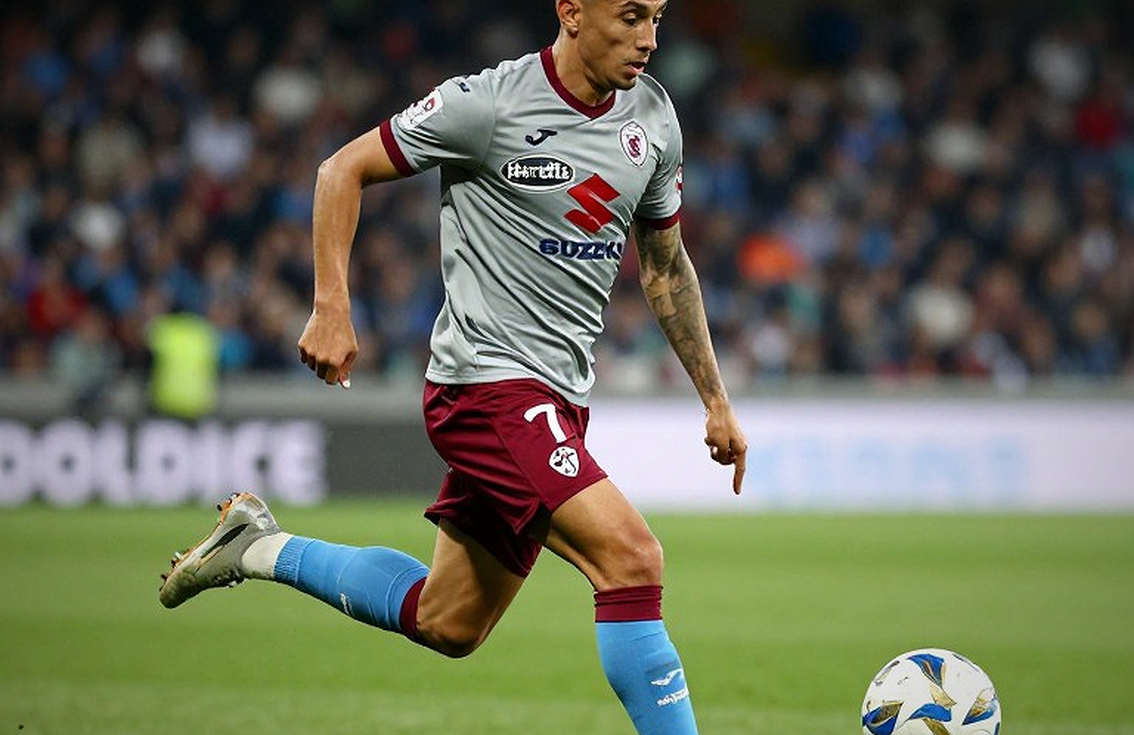
The coaching shift: from Igor Stimac to Manolo Marquez
Part of the answer lies in the change that arrived almost simultaneously with Chhetri's farewell. Igor Stimac's tenure ended and Manolo Marquez, a coach shaped by the Spanish tradition, was appointed head coach of the men's national team. The appointment was itself a signal — the administration chose continuity of experience over continuity of personnel, opting for a coach whose background prioritises ball control, positional play and structured build-up.
Marquez faces a double challenge. First, he must build a side that moves beyond its dependence on Chhetri. Second, and harder, he must establish a style of play grounded in what Indian players can actually do, not in imitation of a European template. The national team has traditionally relied on quick wingers, a disciplined midfield and counter-attacking transitions. To convert suddenly to a high-pressing, possession-dominant model carries the risk that the team neither retains its old identity nor acquires a new one.
The Indian Super League: foundation or illusion?
The biggest legacy of the past decade is the rise of the Indian Super League. It gave players a professional environment, regular competition and visibility. Domestic rivalries among clubs such as Mohun Bagan, Bengaluru FC and Mumbai City have kept spectators engaged.
Yet an honest assessment must also concede that league expansion and national team quality have not grown in the same direction. The framework governing foreign player participation has been altered repeatedly, leaving domestic youngsters with uneven playing time. Under pressure for results, clubs have continued to favour foreign players who deliver immediately, while academy graduates have sat on benches.
This is where the gap between the national team and the domestic league becomes visible. League success does not automatically translate into national team success; that requires a clear blueprint aligning club and country interests. In Indian football, that blueprint remains incomplete on paper and largely absent in practice.
Youth development: the oldest unresolved problem
Measured against its population and its appetite for football, India has far too few qualified coaches, quality pitches and age-group competitions. Outside the major cities there is no consistent system for identifying talent. Even those who emerge often depend on individual effort, family resources or the goodwill of a single academy.
The direct consequence is a lack of depth in the national squad. When Chhetri was injured or unavailable, the shortage of options became obvious. Goalkeeper Gurpreet Singh Sandhu and defender Sandesh Jhingan sustained high standards over long periods, but the queue behind them remained thin. Players such as Manvir Singh, Lallianzuala Chhangte, Sahal Abdul Samad, Anirudh Thapa and Liston Colaco possess ability, but expecting consistent international output from them requires that they have regular exposure to high-level competition.

The 2026 expansion: opportunity and trap
The 2026 FIFA World Cup expands to 48 teams, and the Asian confederation has been allotted more places. For Indian football this looks like a historic opening — the distance to the World Cup has shrunk on paper. But the same expansion is also a trap.
More places do not mean easier competition. Beyond Asia's established powers, teams across Southeast and Central Asia have invested in their structures. India cannot simply wait for one of the enlarged slots to fall its way. Without improvement in ranking, playing style and game management, even the expanded allocation will go in other teams' favour.
That is why the most important question for India over the coming years is not whether it reaches a World Cup, but whether it can become a team that enters every match with a plan, holds its structure under pressure, and does not depend on individual brilliance for results.
Spectators, culture and pressure
Indian football's strongest asset is its audience. The rivalry between Mohun Bagan and East Bengal in Kolkata is counted among the oldest and most passionate in world football. Kerala, Goa, Punjab and the Northeast carry deep football cultures. This audience is the foundation on which a professional structure can be built.
But the same passion generates pressure. The intensity of criticism after defeats, a lack of trust in administration and constantly shifting policies all weaken the ecosystem in which players and coaches develop. A demand for a stable, transparent and long-term plan now comes not only from journalists but from ordinary supporters.
The road ahead
Transitional periods are always uncomfortable, and Indian football stands precisely there. An era has ended; a new identity has not yet taken shape. Marquez has a rare opportunity that his predecessors did not — to define the team afresh, outside the shadow of any single player.
Yet that opportunity will not be decided on the coaching board alone. It depends on whether young players across the country can find pitches, coaches and competition; whether clubs are willing to invest in domestic talent; and whether the administration can hold to a plan that outlasts elections and appointments.
Whether Indian football produces another player like Chhetri is something no one can state with certainty. But if the team can build a structure in which such a player can emerge, then the loss of one player may, within a few years, become the most useful lesson the country could have received. That is both the question and the answer.