
Glenn Maxwell Retires from T20Is and First-Class Cricket: 13 Years, 130 Matches, 5 Centuries — and a Career That Is Not Over Yet
मुख्य तथ्य एक नज़र में — ग्लेन मैक्सवेल (38 वर्ष) ने T20 अंतरराष्ट्रीय, प्रथम श्रेणी और लिस्ट-A क्रिकेट से संन्यास की घोषणा की; वनडे से वे पिछले साल जून में संन्यास ले चुके थे। वे T20 फ्रैंचाइज़ी क्रिकेट से संन्यास नहीं ले रहे — मेलबर्न स्टार्स के साथ उनका बिग बैश लीग अनुबंध 2027-28 सीज़न के अंत तक है, और 18 दिसंबर को MCG पर एडिलेड के खिलाफ सत्र-ओपनर उनका अगला लक्ष्य है। करियर आंकड़े: 130 T20I मैच, 13 साल, 2,897 रन (ऑस्ट्रेलिया की सर्वकालिक सूची में तीसरे, वॉर्नर और फिंच के बाद), और 5 T20I शतक — दुनिया में केवल वे और रोहित शर्मा इस आंकड़े तक पहुंचे हैं। उनका पहला शतक ओपनिंग में पल्लेकेले में 65 गेंदों पर नाबाद 145 रन (9 छक्के) था; बाकी चारों शतक नंबर-4 पर आए — दो ऑस्ट्रेलिया में, दो भारत में, 2018-2024 के बीच। 2023 के बाद कोई प्रथम श्रेणी मैच नहीं। वे पिछले T20 विश्व कप की ऑस्ट्रेलियाई टीम के सबसे उम्रदराज़ खिलाड़ी थे। ऑस्ट्रेलिया ने विश्व कप के बाद केवल तीन T20I खेले (बांग्लादेश में), जिनमें युवा खिलाड़ियों को मौका दिया गया — यानी उत्तराधिकार संन्यास की घोषणा से पहले ही परखा जा चुका था। उनके अनुसार टीम प्रबंधन से कोई दबाव नहीं था और उन्होंने दरवाजा खुला रखा है; यह खिलाड़ी का बयान है, स्वतंत्र रूप से सत्यापित तथ्य नहीं। घुटने के प्रबंधन को संन्यास का स्पष्ट कारण बताया गया है। स्पष्ट सीमा: वे अंतरराष्ट्रीय T20 से सेवानिवृत्त हैं, T20 क्रिकेट से नहीं। कोई सत्यनिष्ठा, शासन या सट्टेबाजी-संबंधी जोखिम-संकेत उपलब्ध सामग्री में नहीं है; स्ट्राइक रेट, गेंदबाजी इकॉनमी और घरेलू-विदेशी विभाजन के आंकड़े उपलब्ध नहीं हैं, इसलिए उनके ऑलराउंड मूल्य का संख्यात्मक आकलन संभव नहीं।
Australian cricket has formally closed a chapter. Glenn Maxwell, 38, has announced his retirement from T20 internationals, first-class cricket and List A cricket. In remarks published on cricket.com.au — Cricket Australia's own digital platform — the framing is unambiguous: the decision was player-initiated, there was no pressure from team management, and the door has been left open rather than shut.
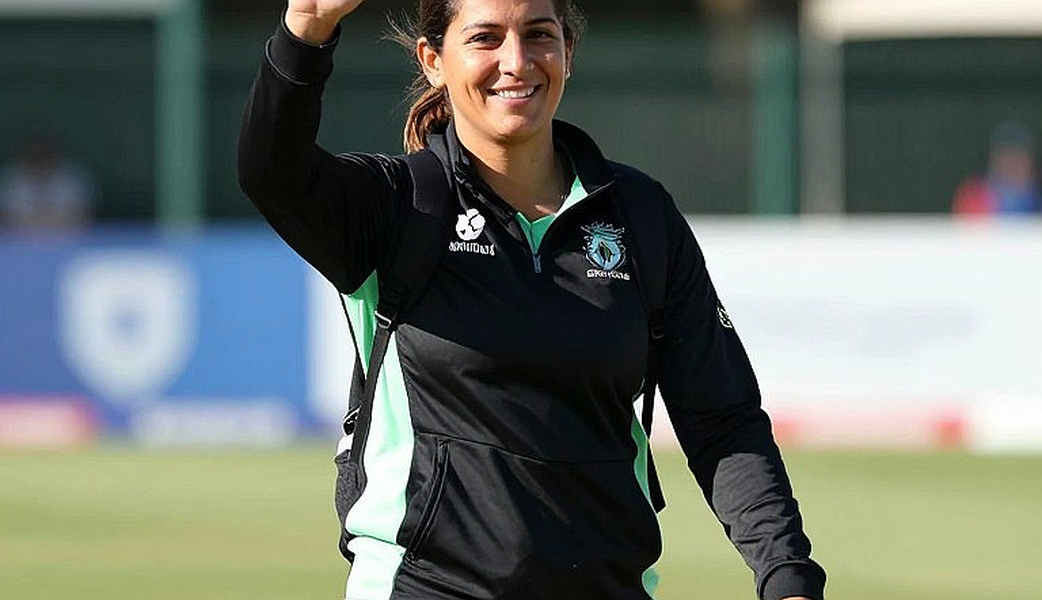
The most important part of this story, however, is not what has been given up. It is what has been retained. Maxwell has retired from international cricket, but not from franchise T20. His Big Bash League contract with Melbourne Stars runs to the end of the 2027-28 season. What the wider public is reading as an ending is in fact a format contraction — the surrender of international obligations and the preservation of domestic franchise ones.
What has been surrendered, what has been kept
The list of retirements is clear: T20Is, first-class and List A. He had already retired from ODI cricket in June last year. He will therefore not play Sheffield Shield or domestic one-day cricket for Victoria, and will not appear for Australia's T20 side. His last first-class match was in 2026 — a date that by itself confirms the red-ball game was never a central part of his identity. Calling that a retirement is generous; it is a formality.
What remains is the Big Bash League, Melbourne Stars, and a contract to 2027-28.
The numbers: century density, not run volume
Maxwell finishes with 2,897 T20I runs — third on Australia's all-time list behind David Warner and Aaron Finch — from 130 matches across 13 years. That is a longevity benchmark.
But the real number is five. Five T20I centuries. In a format where a century is a low-probability event, only one other batter in the world has reached that mark at international level: Rohit Sharma. It is the single strongest piece of evidence for his T20I batting ceiling.
The first century and the four that followed
His first T20I hundred came at Pallekele — 145 not out from 65 balls, with nine sixes, at a strike rate of roughly 223, opening the batting. It is a career-defining outlier and should not be treated as his typical output.
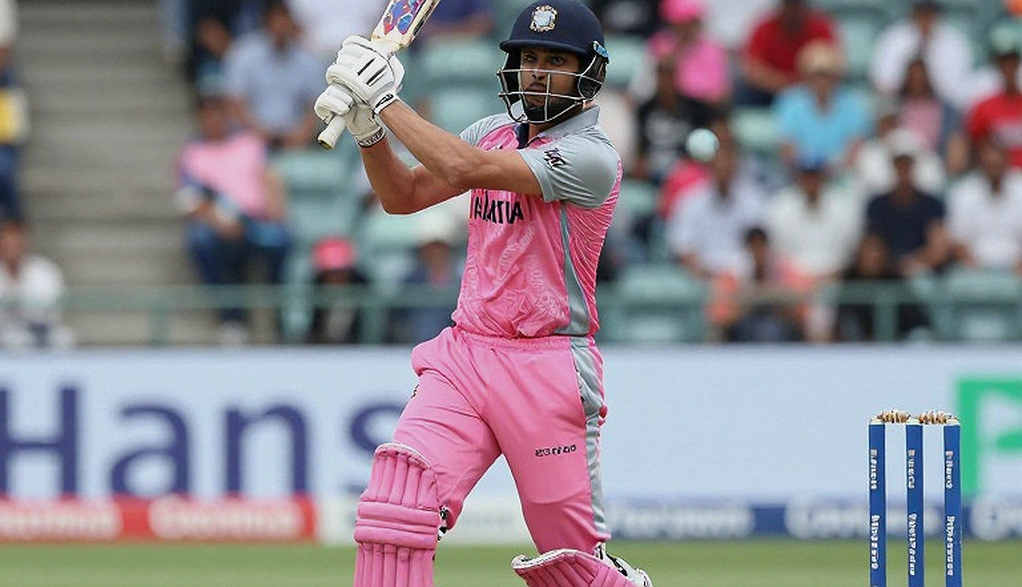
Because the next four all came at No. 4 — two in Australia, two in India, between 2026 and 2026. That is the most analytically informative fact in the whole story. Australia progressively converted him from an opener into a middle-order enforcer and finisher: against spin, in the middle overs, with the boundary riders out.
The consequence is that comparing his strike rate with openers' strike rates is invalid. A No. 4 faces more spin, more sweepers, and an older ball. The same strike rate at No. 4 means materially more than it does at the top of the order.
Age 38: not a question about the age curve, but its answer
Batters typically peak between 27 and 33. Maxwell is 38. The retirement decision is consistent with expected physical decline rather than a form collapse. The question is not whether he is past the peak; the question is the mechanism. And he named it himself: the knee.
The most practical sentence in his statement is that he wants to invest more time in his body to get through the remaining couple of tournaments. That is not a motivation statement. It is a workload-management statement. Note also the sequencing: ODI first, in June last year, then T20I and red-ball. The 50-over format is the hardest on the lower limbs — long spells, long days, repeated sprinting. For a player managing a knee, it is the first format to go. The order is rational.
The missing data is also information
Honesty is required here. The available material provides no strike rate, no bowling economy rate, no home-away split and no pace-versus-spin split. His all-round value therefore cannot be quantitatively assessed. The 'allrounder' descriptor in reporting is qualitative, not quantitative.
What can be inferred — and must be labelled as inference — is that his bowling contribution has almost certainly been declining for several seasons, the standard pattern for a 38-year-old part-time spinner with a knee issue. In his final years, his selection value was likely batting-dominant, with bowling as a bonus.
One more element the numbers cannot capture: catching. The reference to a catalogue of classic catches points to fielding as a materially undervalued part of his T20I package.
Team picture: succession was tested before the announcement
This is the least discussed and most important team-level fact. Australia have played only three T20Is since the World Cup — all in Bangladesh — and used them to introduce younger players, who performed well. The succession trial happened before the retirement was announced.
That sequence is unusual and well executed. Normally the order is reversed: the senior player leaves, the team then searches for a replacement, and a gap opens in between. Here the gap was tested first and vacated second. Short-term performance risk is materially lower as a result.
Maxwell was the oldest player in Australia's most recent T20 World Cup squad, which makes him the terminal node of the previous generation. His exit removes the last obvious 'x-factor' designation from Australia's T20I middle order.
But a structural vacancy remains, and it is not about run tallies. Australia need a No. 4 who can hit spin and pace with equal 360-degree range. That is scarce, specialised skill. The Bangladesh series is a weak but non-zero signal that a candidate exists — three matches is not proof.
Rankings: the absent information
No ICC ranking data, no Bangladesh series results and no named successors appear in the source material. Any claim about Australia's T20I ranking trajectory would be speculation. What can be said is bounded: a board's willingness to move on from a 130-cap player without evident disruption indicates strong bench depth.
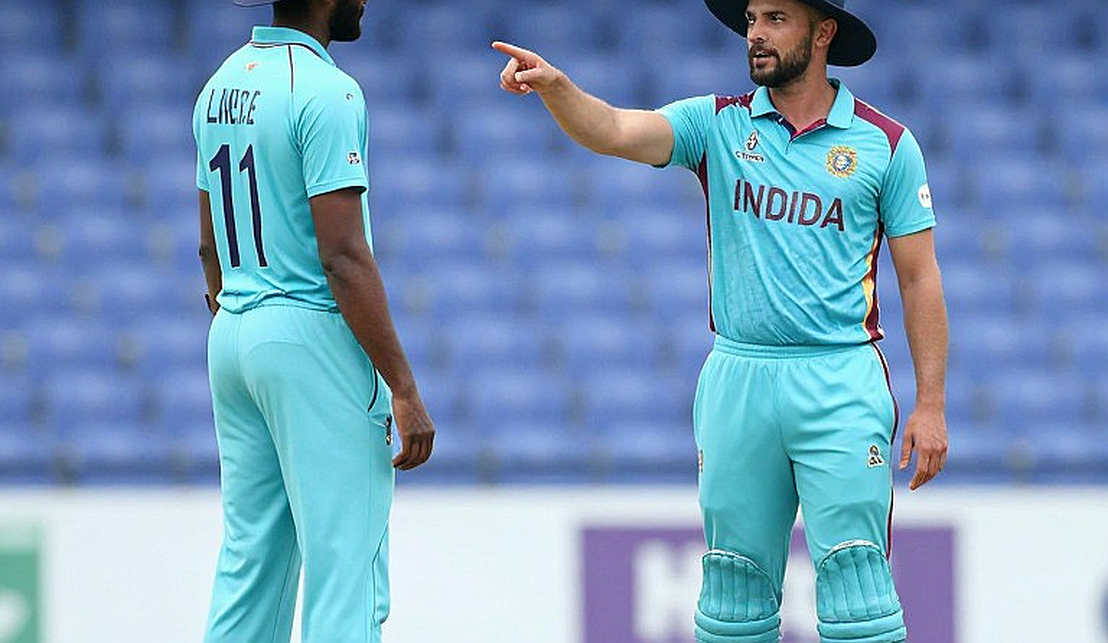
One directional signal does exist. His four No. 4 centuries were split evenly between Australia and India, which is at least consistent with output that was not home-condition dependent. Without pace-versus-spin splits, that is a signal, not a conclusion.
Commercial picture: the contract term is the story
A Melbourne Stars contract running to the end of 2027-28 — roughly four more seasons from a 38-year-old — indicates the franchise values him as a franchise anchor and commercial draw, not purely as on-field output. That implies a commercial-value premium distinct from sporting value. No financial figure is disclosed.
The retirement pathway here is the inverse of the commonly flagged conflict pattern. The usual controversy involves a player leaving international duty mid-cycle for league money. Maxwell has formally exited international cricket and retained the league contract — removing the conflict rather than creating it.
One phrase deserves attention: the remaining couple of tournaments. That implies a finite, self-defined franchise horizon rather than an indefinite T20 mercenary career. It is an important distinction from the league-first free-agency model.
The near-term target is explicit: the BBL season opener on 18 December at the MCG against Adelaide. Knee management is being organised around that date.
Governance: no red flag
Retiring from international cricket while holding a domestic contract is the most procedurally straightforward transition in the sport. No NOC, no eligibility change, no cooling-off period.
One nuance must be kept explicit in reporting: he has retired from T20 internationals, not from T20 cricket. Conflating the two is a reporting error.
There is a domestic planning consideration — Victoria must replace him in List A — but that is squad planning, not a governance issue. Structurally, formal retirement from T20Is removes any future NOC-dependent availability question for overseas leagues.
Risk: sporting, not commercial
The dominant risk is the unfilled No. 4 enforcer role — a scarce function, not a run tally — and it has been partially mitigated, not solved. Second is the loss of knockout match-turning capacity, which is structural and not replaceable in the short term. Third is the knee, now the single most trackable risk variable, concentrated in the BBL and any overseas T20 appearances. Fourth is a middle order losing its most experienced campaigner at the same moment as a generational handover.
No integrity, betting or anti-corruption signal appears in any information point. Inferring one would be baseless.
Overall risk rating: low.
Public narrative: a rare case where story and data agree
The usual media hazard is inflating a small-sample highlight into greatness. That does not apply here: 13 years and 130 matches is a full career, not a hot streak. Public memory will foreground three things — 360-degree hitting, the 145 at Pallekele, and the 2026 T20 World Cup final, where he hit the winning runs. The data supports the narrative; the gap between sentiment and fundamentals is small.
The highest-narrative-load passage is the emotional detail about choking up in front of Victoria teammates. It will dominate coverage, displacing the more analytically relevant contract and role-migration facts.
The 'no pressure from team management' line also performs a narrative function: it pre-empts the standard 'veteran pushed out' storyline. It should be treated as the player's account, not independently verified fact.
Industry transmission: the real effect is domestic
The clearest transmission runs upstream to midstream: the Bangladesh series moved value from an individual career into squad depth before the announcement. Downstream impact is concentrated in the BBL, not international cricket, because the contract to 2027-28 is where his commercial value will continue to be realised.
There is no South Asian market transmission in the source material — no IPL, PSL or India-related commercial connection. Any claim of IPL-ecosystem impact would be unsupported. Talent supply probably benefits: four more seasons inside the domestic system keeps an elite T20 middle-order specialist accessible to younger Victorian and Stars players.
The correct reading
Maxwell's retirement is an example of something modern cricket has made normal: a career is no longer a single line but a layered structure. International cricket, domestic first-class, domestic List A and franchise T20 each carry different costs and different returns. A 38-year-old who preserves the highest-revenue, lowest-physical-load format and surrenders the rest is making a rational decision, not an emotional one.
Which is why reading this as an obituary is wrong. On 18 December he will be at the MCG. The international career of a five-century batter has ended; the batter has not.
Signals to track
Australia's No. 4 output over the next 6 to 12 T20Is; Maxwell's knee status and Stars team announcements before 18 December; any extension or final-season signalling after 2027-28; formal Cricket Australia and selector statements; and any overseas T20 league participation.
Disclaimer
This report is based on public information and is provided for sports-information reference only. It does not constitute betting advice. Sporting outcomes are highly uncertain; analytical conclusions should be treated rationally.